Angry Birds Dream Blast
- 4.6
- Rating
- 10.00M
- Installs
- Free
- Price

 Analysis by App-foxy
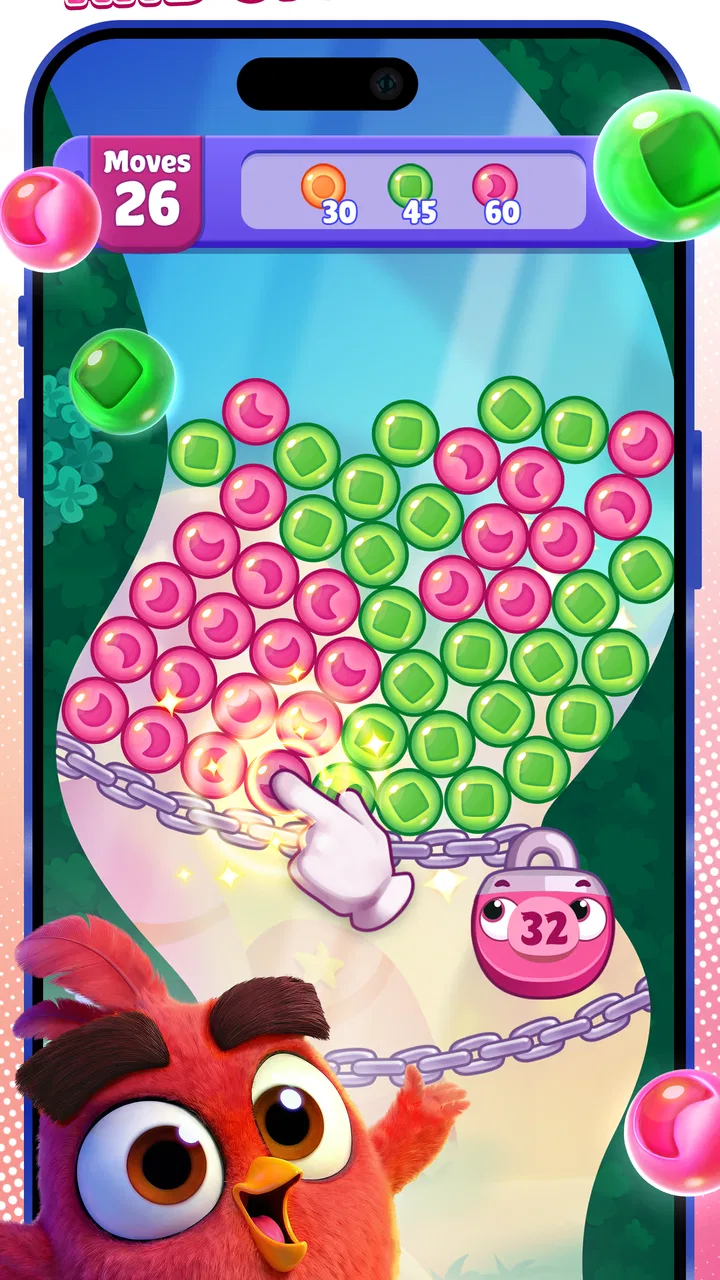
I keep coming back to Angry Birds Dream Blast when I want a puzzle game that makes sense within seconds. It is bright, gentle, and easy to pick up without demanding a long tutorial or a serious time commitment. The basic pleasure is immediate: I look at a compact puzzle board, spot useful groups of matching bubbles, tap, and watch the pieces burst with cheerful effects. That simplicity is exactly why it works so well for short breaks.
What surprised me is how much the game’s appeal depends on timing rather than raw difficulty. A single move can clear a useful section of the board, while a better-planned chain can change the whole shape of the puzzle. I never feel lost for long, but I also do not feel that every level solves itself. For me, that balance makes it a comfortable choice for a commute, a waiting room, or a few quiet minutes before bed.
Why the first few minutes feel so approachable
Angry Birds Dream Blast is a free puzzle game from Rovio Entertainment Oy, built around colorful bubble-blasting challenges and the younger versions of the familiar Angry Birds characters. The presentation is playful rather than aggressive, which fits its Everyone age rating. I can hand it to someone who does not normally play games and explain the basic idea almost immediately.
You May Also Like

 Blood Strike: 2.5 Anniversary
Blood Strike’s Loadouts Turn Every Drop Into a Tactical Gamble
A close look at Blood Strike’s custom loadouts: how fast access to signature weapons reshapes its battle royale rhythm, rewards preparation, and narrows the gap between fights.

 Pandora - Music & Podcasts
Pandora’s Music Is Easy to Start, but Harder to Recover
Pandora’s strength is its low-effort path from a seed to a station. Its weak spot is how much confidence it asks you to place in connection, setup, and quiet recovery.

 8 Ball Pool
 Is Built on Rivalries, Rematches, and Routine
A close look at the rivalries, rematches, shared routines, and unanswered safety questions that turn a quick pool match into a persistent mobile community.

 Samsung Music
’s Quiet Strength Is Playing What You Already Own
Its reach comes less from spectacle than from dependable access to a personal library. That simplicity is both the app’s strongest retention engine and its ceiling.

 AccuWeather: Weather Radar
AccuWeather Review: A Quick, Clear Forecast for Everyday Decisions
For everyday plans, the best forecast is the one you can understand quickly. AccuWeather makes rain timing, radar, and local conditions easy to act on, with a few trade-offs.

 Hill Climb Racing
Why Hill Climb Racing Still Turns Crashes Into One More Run
A tiny car, a bumpy hill and one more upgrade: Hill Climb Racing keeps resurfacing because its simple chaos makes every near-miss feel personal.
More From Our News Desk



The important distinction is that this is not a traditional physics-based Angry Birds experience. You are not aiming birds at structures or trying to calculate trajectories. Instead, the focus is on recognizing nearby bubble groups and choosing when a move is worth spending. That change of format gives the characters a softer, more relaxed setting while keeping the series’ recognizable personality.
The opening experience is particularly good for people who dislike complicated puzzle interfaces. The board communicates most of what matters visually, and the colorful pieces make possible moves easy to scan. I do not need to memorize a large collection of symbols before playing. The challenge comes from seeing the board clearly and deciding whether to take a small match now or prepare for a more valuable combination.
That clarity is one of the game’s strongest qualities. Many mobile puzzle games bury their main action under currencies, menus, events, and layered rewards. Here, the central action remains obvious: examine the arrangement, tap a worthwhile group, and react to what appears next. The surrounding progression can add motivation, but the individual puzzle still feels like the reason to open the game.
The game is also forgiving in the way it introduces its ideas. I can play casually without treating every early level as a test of expertise. This makes it suitable for younger players and for adults who want something light. The age rating supports that broad accessibility, although the presence of in-app purchases means I would still set sensible device controls before giving it to a child.
The satisfying part is choosing the right moment
The simple control scheme does not mean every decision is meaningless. I often see several possible groups and have to decide which one improves the board most. A small clear may open space, bring useful bubbles together, or prevent a later turn from becoming awkward. The best moves are satisfying because they feel noticed rather than merely pressed.
One practical habit helped me enjoy the puzzles more: I pause for a second before tapping the first obvious group. The largest visible match is not always the best move. Sometimes a smaller group is positioned to create a stronger follow-up, while an attractive clear on the edge leaves the central area less useful. This is a modest strategy, but it turns the game from automatic tapping into a quick visual exercise.
Special combinations are most enjoyable when I create them deliberately rather than stumbling into them. I try to look for moves that place matching colors close together or open a route through a crowded section. The board can change quickly after a clear, so I avoid planning too many moves ahead. A short look at the current arrangement is more useful than imagining a complicated sequence that the next drop will destroy.
This is where the game differs from very basic match-three alternatives. It is not only about swapping two pieces into place and waiting for a fixed pattern. The freedom to tap groups gives the board a more immediate, tactile feeling. On the other hand, players who prefer highly predictable grids may find the changing arrangements less controllable than a classic swap-based puzzle.
Short sessions, interruptions, and returning later
The strongest fit for this game is a fragmented day. I can begin a level while waiting for coffee, play a few moves, and stop when something else needs my attention. That short-session rhythm is more important to me than the colorful theme. The game does not require me to settle in for a long campaign before it becomes enjoyable.
A realistic example is a morning commute with several interruptions. I might open a level, make a couple of careful moves, put the phone away when the train arrives at a station, and return later with the same puzzle still in mind. That kind of stop-and-start use is where the design earns its place on my phone. It gives me a complete little activity rather than asking me to protect a large block of free time.
I also like that the basic interaction is comfortable when I am tired. There is no need for rapid tapping, precise aiming, or a long chain of inputs. I can play with one hand and keep my attention mostly on the board. That makes it better for relaxed evening use than puzzle games that punish every moment of distraction.
Still, “casual” does not mean completely interruption-proof. If I leave a level at an awkward point, I may return needing a moment to remember what I was planning. The visual board is easy to understand, but my intended sequence may no longer be fresh. My solution is simple: before stopping, I either make the obvious next move or mentally note the useful area of the board. I would not rely on it for a situation where I need to respond instantly to notifications or switch constantly between tasks.
The game’s free entry also helps with spontaneous use. I can install it without paying upfront, which removes the usual barrier to trying a casual puzzle. At the same time, optional purchases range from $0.49 to $134.99 per item. That wide range is worth taking seriously. I would treat the free download as an invitation to sample the core loop, not as a promise that every later convenience will remain cost-free.
How the progression affects the rhythm
Progression gives the short sessions a sense of direction. Completing a level feels more meaningful than playing an endless board with no change, and the themed presentation makes the journey feel lighter than a plain score-chasing puzzle. I enjoy having a reason to continue, especially when I have only a few minutes and want a clear stopping point.
The trade-off is familiar in free-to-play puzzle design: progression can make me more aware of limits, failed attempts, or optional spending as I continue. Even when the core puzzle is enjoyable, the surrounding structure can influence whether I feel relaxed or pressured. My advice is to decide early what kind of player you are. If you are happy to play at a leisurely pace, the game is easier to appreciate. If you want to clear every obstacle immediately, the free format may become more frustrating.
I would also avoid judging the whole experience by the first easy levels. The early stages are useful for learning the visual language, but they do not show how much patience you will have when a board demands several attempts. For me, the real test is whether I still enjoy examining the layout after a setback. If I do, the game has enough replay value to stay installed. If I only care about the next reward, the appeal fades faster.
Replay value without pretending every level feels new
The game’s replay value comes from small changes in board reading. A familiar type of objective can still feel different when the bubble arrangement, available space, and timing of a clear change. I enjoy trying a level again with a different first move, especially when my initial attempt failed because I spent a useful group too early.
That said, I do not think every stage offers endless discovery. The basic action remains consistent, and players who need constant mechanical novelty may eventually find the loop repetitive. The game is strongest when repetition is part of the comfort: I know how to read the board, but I still have a reason to look closely. It is weaker for anyone expecting a puzzle campaign that continually reinvents itself.
One of my favorite ways to keep repeated attempts interesting is to change the goal in my head. On one try, I focus on finishing efficiently. On another, I look for a safer opening that preserves space. This does not transform the rules, but it gives me a more thoughtful reason to replay a level instead of simply hoping the next attempt works.
Another useful approach is to resist tapping immediately after a large clear. The board often looks exciting when bubbles disappear, but the next arrangement deserves a fresh scan. I have made poor moves by assuming that the same color pattern would remain useful after the pieces settled. Treating each new board state as a separate decision makes the game feel less random and improves my results without requiring complicated techniques.
This is also where it compares well with endless match-three games. Those alternatives can be excellent when I want a familiar, rapid loop, but they often blur together after a long session. Dream Blast feels more like a sequence of small puzzles with distinct stopping points. In contrast, a dedicated logic game may offer deeper reasoning and fewer bright distractions, while this one prioritizes immediate feedback and low entry friction.
Who will enjoy it, and who should look elsewhere
I would recommend it to someone who wants a friendly puzzle for short breaks, prefers simple touch controls, and enjoys gradual progress rather than a single difficult brainteaser. It is especially suitable for players who like visual planning but do not want to read instructions or learn complex systems before having fun. The familiar characters help, but the game remains accessible even if you are not deeply invested in the wider Angry Birds brand.
I would be more cautious recommending it to a player who dislikes free-to-play pressure, wants a completely uninterrupted puzzle experience, or expects every level to demand serious logical deduction. Someone looking for a pure offline-style brain-training tool may prefer a minimalist puzzle app with fewer progression distractions. A competitive player may also want a game built around rankings or precise mastery rather than relaxed repetition.
Families should pay attention to the purchase model. The Everyone rating describes the intended content level, but it does not remove the need to supervise spending on a shared device. I would use parental purchase controls and explain that the game can be enjoyed for free without treating every optional item as necessary.
Device compatibility is reasonably approachable for an older phone or tablet, since the minimum operating system is Android 8.0. The current version is 1.102.0, so I would check that a device meets the system requirement before trying to install it. I also appreciate that the game has reached over ten million installs and holds a 4.6 average from around 502 thousand ratings; those figures suggest a substantial audience, though they should not replace your own judgment about the free-to-play rhythm.
The game has been available since November 12, 2018, which gives it a mature feel rather than the uncertainty of a brand-new release. Its listing also includes around 30 thousand written reviews, and I see that long presence as useful context: this is an established casual puzzle rather than a brief experiment. I would still judge it by how its current version feels on my device, because a long history does not guarantee that every player will enjoy the same progression pace.
My casual verdict after living with the loop
My overall impression is positive because the game understands the value of a small, complete moment of entertainment. I can open it, understand the board, make a few satisfying clears, and leave without feeling that I have started an enormous commitment. The visual feedback is cheerful, the controls are approachable, and the puzzle decisions are just meaningful enough to keep the tapping from becoming empty.
The best experience comes when I treat it as a gentle habit rather than a challenge to conquer as quickly as possible. I look for the move that improves the board, accept that some attempts will be awkward, and stop when the session has done its job. That attitude also reduces the temptation to spend simply because a level did not go my way.
There are clear limits. The central pattern can become repetitive, the free-to-play structure may not suit everyone, and players seeking deep, uncompromising logic will find more demanding alternatives elsewhere. Its charm is not unlimited variety; it is the combination of readable puzzles, soft presentation, and a rhythm that fits around ordinary life.
For me, that makes Angry Birds Dream Blast a strong recommendation for relaxed mobile puzzling. It is free to start, rated for Everyone, and easy to understand without being completely mindless. I would install it for short breaks, family-friendly play, or those moments when I want immediate pleasure with a little visual planning. I would skip it only if I already know that optional purchases, repeated attempts, or a familiar puzzle loop will quickly irritate me.
The main reason to try it is simple: it respects a few spare minutes. You get a colorful board, a clear decision, and a satisfying result without needing to rearrange your day around the game. That is not a substitute for a deep puzzle masterpiece, but it is a very good formula for a casual companion that I can pick up and put down whenever I need a small mental break.
FAQs for Angry Birds Dream Blast
01What is Angry Birds Dream Blast about?
Angry Birds Dream Blast is a puzzle game where players pop colorful bubbles to solve levels. It features beloved Angry Birds characters in a dreamy, vibrant setting. The game focuses on tapping bubbles to create chain reactions, offering a casual yet engaging experience with hundreds of levels to explore.
02Is Angry Birds Dream Blast free to play?
Yes, Angry Birds Dream Blast is free to download and play on both Android and iOS devices. However, it does offer in-app purchases for items like boosters and extra lives. These purchases are optional and not necessary to progress through the game, but they can enhance the experience.
03What are the main features of Angry Birds Dream Blast?
The game includes hundreds of levels with varying challenges, delightful animation, and sound effects. Players can enjoy daily rewards, special events, and connect with friends for a competitive edge. Additionally, Angry Birds Dream Blast provides a smooth, user-friendly interface suitable for both casual and dedicated gamers.
04Does Angry Birds Dream Blast require an internet connection?
Angry Birds Dream Blast can be played offline, which is perfect for users who want to enjoy the game without a constant internet connection. However, certain features, like leaderboards and special events, do require an internet connection to function properly and keep the game updated.
05How does Angry Birds Dream Blast differ from other Angry Birds games?
Unlike previous Angry Birds titles focused on slingshot mechanics, Dream Blast is a bubble-popping puzzle game. It emphasizes strategic bubble popping and chain reactions rather than launching birds. This shift in gameplay offers a fresh experience while retaining the charm and characters fans love.
Pros
- Engaging physics-based puzzles.
- Vibrant and colorful graphics.
- Frequent updates with new levels.
- Simple controls
- easy to learn.
- Suitable for all age groups.
Cons
- In-app purchases can be costly.
- Some levels require luck
- not skill.
- Occasional ads interrupt gameplay.
- Limited lives can halt progress.
- Requires internet for full features.

Angry Birds Dream Blast
Gallery